Wedding Gifts 2026: The Trends, and 12 Ideas Worth Giving
Registries went hybrid, cash funds became normal, and the gift beyond the registry got harder to get right. Our read of the published registry research, and twelve ideas that hold up.
Last reviewed . Written by our editorial team from published registry research and gift guides, linked in the text, plus our own product knowledge. We summarise those sources; we did not survey couples ourselves. We make myComics, which is one of the twelve ideas, so weigh that entry accordingly.
By the myComics.ai Editorial Team9 min read
2026 wedding guide · 12 ideas · Editorial disclosure
Quick answer
- Cash funds are now a normal part of most registries, according to the registry studies from The Knot Worldwide and Zola, and many couples mix cash with physical gifts.
- Because the registry covers practical needs, a gift beyond the registry has a different job: it is the one that has to be personal.
- Three kinds of gift hold up well: cash toward something named, an experience the couple do together, and a keepsake that could only have been made for them.
- For the keepsake, the format matters less than the material. A photo book, a letter collection, an illustration or a comic all work if the story in them is specific.
Look at the gift table at most weddings now and you will notice how few boxes there are. A few envelopes, a printed code for the honeymoon fund, maybe a single wrapped parcel from an aunt. The wedding gift used to be a solved problem: the couple was setting up a home from nothing, the registry listed what the home needed, you bought a thing off the list, and everyone was served.
That arrangement quietly stopped describing reality. Many couples marrying now have lived together for years, own a perfectly good toaster, and have replaced the “help us start out” registry with something closer to a savings plan with a guest list.
The published registry research makes the shift concrete, and it changes what your gift is for. A quick disclosure before the list: we make myComics.ai, a tool for personalized comics, and one of the twelve ideas below is a comic book. We have tried to treat it as one option among several.
What do the 2026 wedding gift trends actually say?
Three findings matter more than the rest. We are summarising other people’s research, so follow the links for the figures and methods.
Cash is no longer the awkward option. The Knot Worldwide’s 2026 Annual Registry Study reports cash as one of the gifts couples most want, and a clear majority of registries now include a cash fund. Zola’s reporting on cash registries points the same way: cash funds have moved from a slightly awkward request to an expected line item.
Registries went hybrid rather than disappearing. The same study describes many couples combining traditional gifts with cash funds, and most couples still create a registry of some kind. The registry did not die; it split into “things we still need” and “money toward something specific.”
The money has a destination. Honeymoon and travel are the most common purposes for cash funds in the reporting we read, with savings and a home deposit behind them. Couples are not asking for cash in the abstract. They are asking you to buy a piece of a named thing.
Follow that logic and you land on a useful conclusion. If the registry now absorbs every practical need and funds the trip, a gift beyond the registry is no longer there to be useful. Its job is to be personal, and personal is the part a registry structurally cannot do.
What are the best wedding gifts to give in 2026?
Twelve options, grouped by what they are doing. None of them require you to guess whether the couple already owns one.
Money, but aimed at something
- A named line on the cash fund. Not “toward the honeymoon” but the diving day, the restaurant, the one night in the hotel they hesitated over. Add a card saying which piece you bought. It converts a transfer into a gift.
- The first year fund. Where a couple has a deposit or a renovation in progress, giving toward that is usually worth more to them than anything in a box. Roundups like CNN Underscored’s wedding gift guide now sit cash alongside physical picks rather than treating it as a fallback.
Experiences they do together
- A class they would not book themselves. Pottery, pasta, sailing, a proper wine tasting. The appeal is the afternoon, and sometimes an object made in it.
- A night away, slightly beyond their usual standard. After a wedding, most couples are tired and short of money in the same month. A booked and paid weekend lands well.
- A year of something recurring. A supper club, a climbing membership, a theatre subscription. It keeps arriving long after the thank you notes are finished.
- A dinner with a date already in the diary. The experience gifts that fail are the ones that require the couple to organise them. Book it.
Keepsakes with actual information in them
- A photo book of the years before the wedding, not of the wedding itself. Someone else is already covering the wedding day. Nobody is covering the six years that led to it. Of all the keepsakes here, this is the one we would call the safest.
- A commissioned illustration of a specific place. The flat where they met, the venue, the bar. A human illustrator brings a point of view no template has. Specific beats beautiful.
- A group video or letter collection from the people who could not attend, or who did. Logistically heavy, disproportionately moving, and it costs almost nothing but coordination.
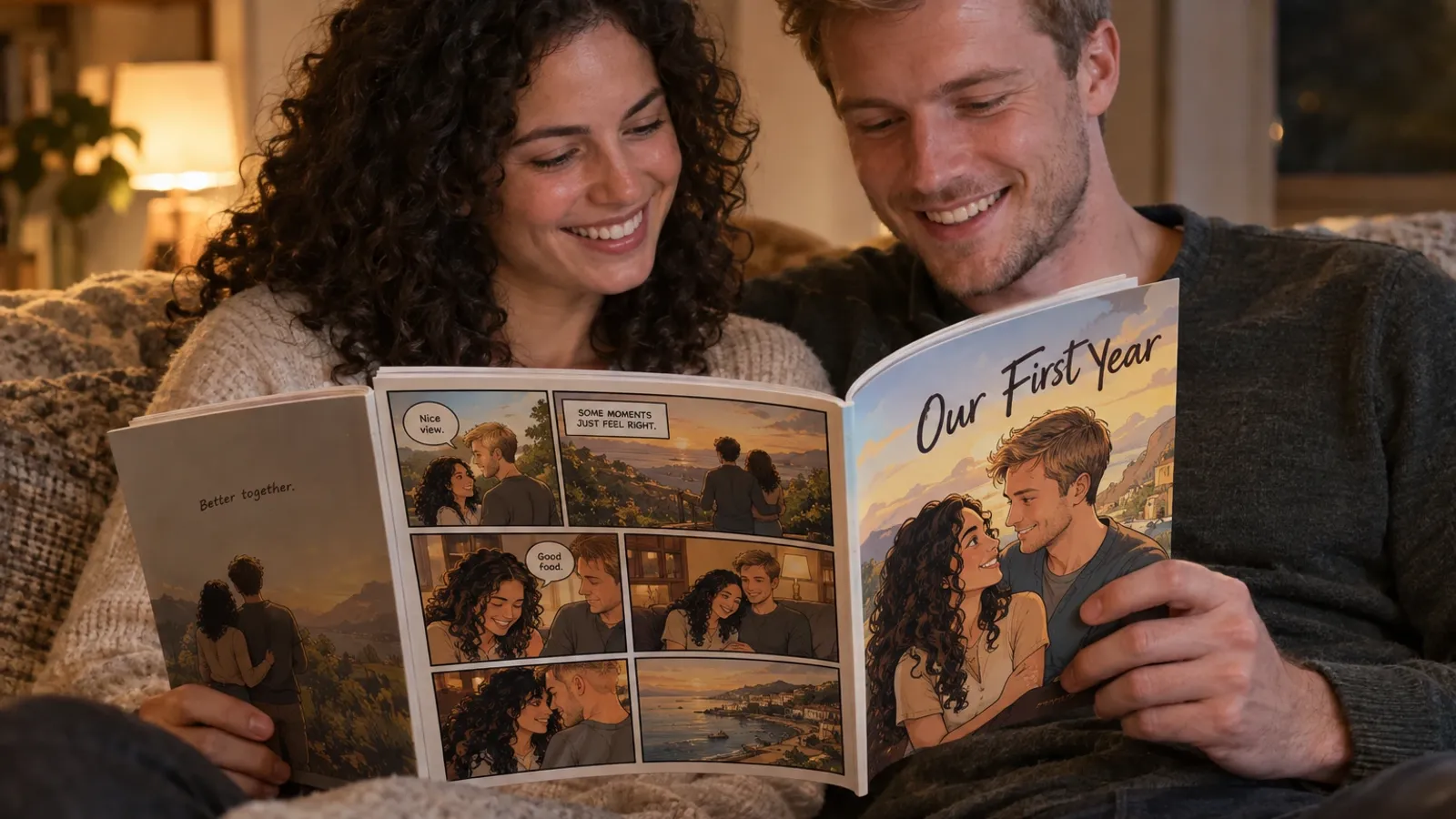
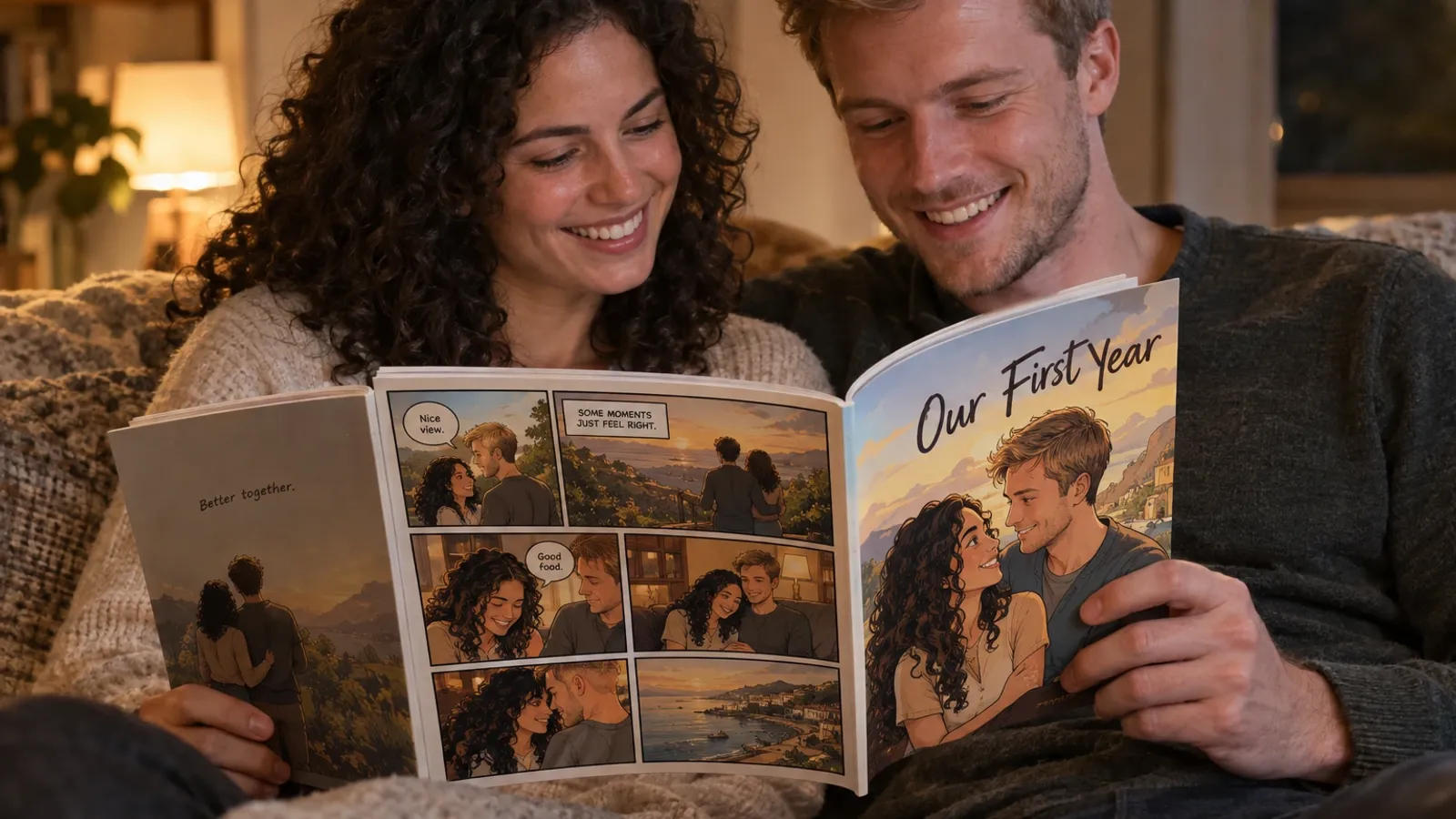
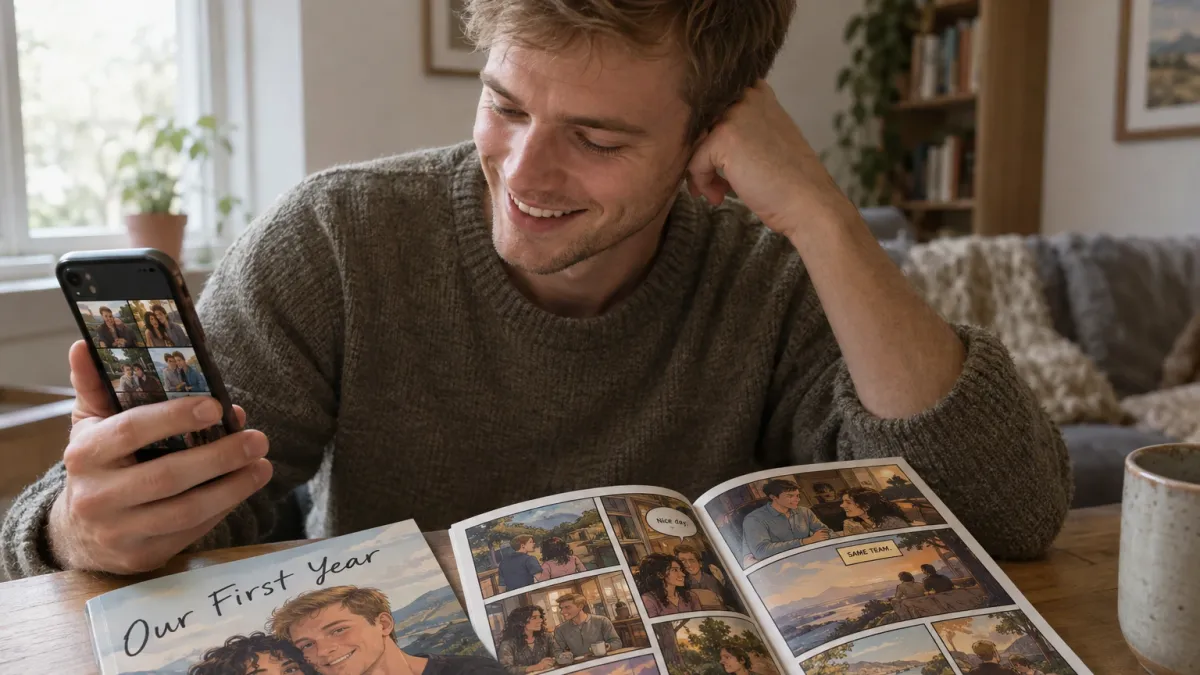
- A personalized comic of their story. The couple drawn as characters, the plot being how they met and what happened next. It suits couples who like being teased a little. More on how to choose between these keepsakes below.
The upgrade tier
- The serious version of a daily object. One excellent knife, one pan they will still use in twenty years, good bed linen. Who What Wear’s wedding gift edit is a good place to browse this category, which survives every trend cycle because it is quietly correct.
- Something for the home they are moving toward, not the one they are in. Ask a sibling what is coming next.
Why does the gift beyond the registry feel harder than it used to?
Because it is now competing on a different axis, and most people have not noticed the switch.
When the registry was the whole gifting surface, going off it was a small risk with a small upside. Now the registry handles need, and anything else is judged on whether it says something. That is a harder brief. It is also why the two common failures look so similar at the reception table: the expensive thing that could have been sent by anyone, and the personalized thing whose personalization is a name printed on an object that already existed.
The second one is the trap worth naming, because there is so much of it for sale. Engraving a date onto a cutting board is not personalization in any meaningful sense. It is a label. The couple can tell the difference, and so can everyone watching them open it.
The test we use is simple: could this gift have been given to a different couple by changing one field? If yes, it is a product with their name on it. If no, if the gift would make no sense for anyone else, it is actually theirs.
Which keepsake suits which couple?
Every keepsake on the list passes that test when it is done well. The difference between them is mostly about the couple’s temperament and how much time you have.
The photo book suits almost everyone and is hard to get wrong. It works best for couples who are sentimental but private, and for givers who have access to old photos through family or friends. Its limit is that it records what happened without saying much about it.
The commissioned illustration suits couples who care about how things look on their walls. A good illustrator will need time and a clear brief, and the result is one strong image rather than a story. If you have a few months and a budget, it is often the most elegant option.
The letter collection or video suits couples with a wide circle of friends and family. It costs little money and a lot of chasing. It is also the one most likely to make someone cry at the table, which some couples love and others would rather do in private.
The comic suits couples with a good story and a sense of humour about it: the terrible first date, the year of long distance, the flat with the broken heating, the dog. It can be funny in a way a framed print cannot, and it tends to get passed around. It suits very private or very formal couples less, and it is a stylized likeness rather than a portrait, so it is not the choice for someone who wants a realistic image of the two of them.
If you are genuinely unsure, the photo book is the default we would reach for. If you know the couple well and there is one story everyone at the wedding already tells, a story format like a comic or an illustrated letter plays to that.

How do you make a story keepsake without it going wrong?
The gift is only as good as the story you put in it, so spend your effort there rather than on the format or the settings.
Pick one arc, not a highlight reel. The instinct is to cram in every milestone. It reads as a list. Choose a single thread, such as how they met, one disastrous trip, or the proposal from the point of view of the person who did not know it was coming, and let it actually be a story.
Go and get the details. The specific ones are what make a reader’s face change: the make of the car, the name of the bar, the phrase one of them repeats. Ask the best man, the sister, the group chat. This is the step most people skip and the step that decides the result.
Use good source photos of both people. This matters for a photo book and matters even more for anything drawn from photos. If you go the comic route, myComics builds a comic character for each person from their own photographs, so both stay recognisable across panels rather than one face being approximated from a group shot. Three to eight clear, well lit photos per person, from different angles, is the practical range. For how the photo step works, see our guide to turning photos into a comic.
Decide digital or printed early. Digital is ready straight away and genuinely useful if you are reading it aloud at the reception or sending it from another country. Printed is the one they keep on a shelf, and anything printed has a real lead time in wedding season. Start when the invitation arrives, not the week before.
Read it once as a stranger. If the emotional beat does not land on someone who was not there, it will not land at the table either. Cut the in jokes that need a footnote and keep the ones that do not.
The wedding page covers the comic version for this occasion. If the marriage is already a few years in, the same approach works for an anniversary or any other couples milestone.
So what should you actually give?
If the couple has a registry, use it. A hybrid registry is a direct statement of what they want, and ignoring it to be original is a choice made for yourself rather than for them. Give toward a named thing, and say which one.
Then, if you are close enough to them that a transfer feels like an undersell, add a second gift: the one with information in it. A photo book of the years before, a bundle of letters, a drawing of the flat where it started, a comic of the story everyone tells about them. Which one matters less than whether it is specific. The gift they will still hand to someone at a dinner party years from now is the one that could only ever have been about them.