Comic Con Los Angeles 2026: Dates, Venue, and How to Actually Enjoy It
The Los Angeles comic con lands on Halloween weekend this year. Where it is, what is on the floor, how it differs from San Diego, and how to walk it without running out of energy by Saturday noon.
Last reviewed . Written by our editorial team from the information the organizers publish about the 2026 event, plus our own view of conventions and comics. We are not affiliated with L.A. Comic Con. We make myComics, which comes up briefly near the end. Lineups and policies change, so check the official site before you plan.
By the myComics.ai Editorial Team9 min read
2026 event guide · Halloween weekend · Editorial disclosure
Quick answer
- L.A. Comic Con 2026 runs Friday Oct. 30 to Sunday Nov. 1 at the Los Angeles Convention Center, 1201 S. Figueroa St. That is Halloween weekend, which changes the whole feel of the event.
- It is a separate event from San Diego Comic-Con: different city, different organizers, different time of year, and far easier to get into.
- The floor splits into four things worth planning around: Artist Alley, the panel rooms, the main stage with its photo ops and autographs, and the gaming and anime areas.
- Doors open mid afternoon on Friday and in the morning on Saturday and Sunday, so Friday is the calm day and Saturday is the crowded one.
- Check the official site for the current guest list and ticket tiers before you plan anything around a specific name. Lineups move.
Search for a comic con in Los Angeles and you get three different events, two of which are in other cities and one of which is an anime convention. It is a slightly absurd situation for a city that makes so much of the pop culture these events celebrate. So, the plain answer first: the big general interest pop culture convention held in the city itself is L.A. Comic Con, and in 2026 it runs Friday October 30 to Sunday November 1 at the Los Angeles Convention Center, 1201 S. Figueroa St, downtown. That is Halloween weekend, which is not an accident and does change what the event feels like.
The rest of this is what the listing pages tend to leave out: how the floor works in practice, which day to pick, why it is not San Diego, and what to do with the feeling most people carry home.
A note on who is writing: we are a small team that writes about comics and makes a comic tool, myComics.ai. We do not run conventions and we are not affiliated with, endorsed by, or connected to L.A. Comic Con in any way. The event facts below come from the organizers’ own site, and lineups and policies move, so check comicconla.com before you plan around a specific name.
When and where is Comic Con in Los Angeles?
Three days, one building.
- Friday, October 30. Doors open in the mid afternoon and the hall runs into the evening. This is the short day and the quiet one.
- Saturday, October 31. A morning open, the longest hours, the biggest crowds, and the day the costume turnout peaks, because it is literally Halloween.
- Sunday, November 1. A morning open and an earlier close. Traditionally the calmest day for Artist Alley and the best one for actually talking to people.
VIP badges get in ahead of general admission each day. In our view that is worth something on Saturday morning and worth very little on Friday.
The venue is the Los Angeles Convention Center in downtown LA, in the same complex as the arena and L.A. Live next door. Take Metro if you plausibly can. Downtown parking during a convention weekend is the thing first time visitors most often get wrong, and a garage queue is a poor way to spend the first ninety minutes of a con.
Is L.A. Comic Con the same as San Diego Comic-Con?
No, and this trips up more people than anything else on this page.
San Diego Comic-Con is the one you have seen on the news: July, San Diego, studio panels in Hall H, badges distributed by lottery months ahead, hotel rooms fought over like concert tickets. It is a different organization entirely, in a different city, at the opposite end of the year.
L.A. Comic Con is the autumn convention in Los Angeles proper. It is large (the organizers describe over 100,000 square feet of exhibit space, hundreds of exhibitors, and 200+ panels across the weekend) but it is not a lottery. You can decide to go a few weeks out and still get in, which makes it a very different kind of plan.
There is also Anime Expo, which happens in the same building in the summer and is anime specific. If someone in Los Angeles says “the anime one”, that is what they mean.
So: same city as one of them, same building as another, a name that sounds like the famous one. Three separate events. Which one is right for you depends on what you want. If studio reveals are the point, San Diego is still the place. If anime is the point, Anime Expo. If you want a broad, reachable con with a lot of room for artists and costumes, this one.
What is actually on the floor?
The show splits into four things, and they reward completely different behaviour. Deciding which one you are there for is most of the planning.
Artist Alley. Rows of working comic artists and illustrators behind their own tables, selling prints and books and taking commissions on the spot. The organizers call it one of the largest artist gatherings on the West Coast, and it is the part of a con people tend to remember months later. It also rewards slowness. You cannot rush a room whose whole value is conversation.
Panels. 200+ of them across three days, ranging from cast reunions on the main stage to a half full room where a few working colourists explain how they actually get paid. Our small opinion: the small panels are often better than the big ones, and the queues are shorter.
The main stage, photo ops, and autographs. The celebrity layer. The 2026 lineup announced so far leans on genre names, Ahsoka cast members among them, but guest lists shift right up to the event, so treat any specific name you read anywhere, including here, as provisional until the official site says otherwise. A practical note: photo ops and autographs are separate things, sold separately and scheduled separately, and they are the part of a con most likely to eat a block of your day.
Gaming, anime, and cosplay. Demo stations and tournaments, an anime area focused on voice actors, and a cosplay championship. Plus, because of the calendar, indoor trick or treating for kids on the Saturday, which is a good reason to bring young children to this particular con.
How do you plan a first visit without burning out?
Conventions punish enthusiasm. A few things that tend to work:
Pick one anchor per day, not five. One panel you will queue for, one artist you will actually talk to. Everything else is drift. A packed schedule usually means running between rooms and seeing less.
Take Friday if you want to breathe. Shorter hours, thinner crowds, and artists who are fresh rather than four hours into a queue.
Eat before you are hungry and carry water. Convention centre food lines are longest at exactly the moment you least want one.
Bring some cash, in small bills. Many Artist Alley tables take cards now, but not all of them, and it is annoying to miss the one print you wanted.
Decide your souvenir budget before you walk in. The floor is designed to separate you from money and it is good at it.
Carry a bag you can walk eight hours with. Prints need to survive the day flat. A tube or a hard folder is the difference between a framed piece and a creased one.
What should you know about cosplay on Halloween weekend?
The costume culture at this con is strong, and the Halloween date adds to it: convention cosplayers and people in ordinary Halloween costumes end up in the same hall, which makes for a friendlier mix than a purist crowd.
Two practical things. First, the props and weapons policy is real and it is enforced at the door. The organizers publish it, security screens on the way in, and anything unsafe gets stopped there. Read it before you build, not after. Second, comfort beats accuracy over an eight hour day. Ask anyone who has cosplayed for a full convention day about their shoes.
If you are not dressing up, you will still spend the weekend near people who are. Ask before you photograph someone. It is a small courtesy and it is the local norm.
Why does everyone leave a con wanting to make something?
This part is not on any event listing, and it is one of the most consistent things about a convention weekend.
You spend two or three days in a building where a lot of people are visibly making things. The person at the table sold you a book they wrote, drew, printed and carried in a suitcase. The panel you sat in was a few people explaining their process to a room of forty. Cosplay is fabrication in public. The whole event suggests that the wall between “person who likes comics” and “person who makes comics” is lower than it looks from outside.
Then you go home, and the feeling fades within a week or so, because the practical version of that idea has usually looked big: learn to draw, or find and pay an illustrator, or accept that the comic in your head stays there.
Where does AI fit in a room full of working artists?
Carefully, and with less overlap than the argument usually assumes. Since we make an AI comic tool, take this section as coming from an interested party.
The people in Artist Alley sell something specific: a voice. A named person with a style you recognize across their whole table, who can take your odd idea and make it better than you described it. We do not think anything generated replaces that. If you want a piece by a particular artist, commission that artist, ideally right there at the table. Buying from the alley is one of the best things you can do at this con.
What AI tools changed is lower down. There are plenty of people who were never going to commission anything, who wanted one small comic about their own friends as a birthday present and were put off by the cost or the process. Before, most of them made nothing. That is where a tool like ours sits, and it is a different job from the one an artist does. If you want a wider picture of what these tools do well and where they fall short, we keep a breakdown of the best AI comic generators, competitors included.
How do you turn the weekend itself into a comic?
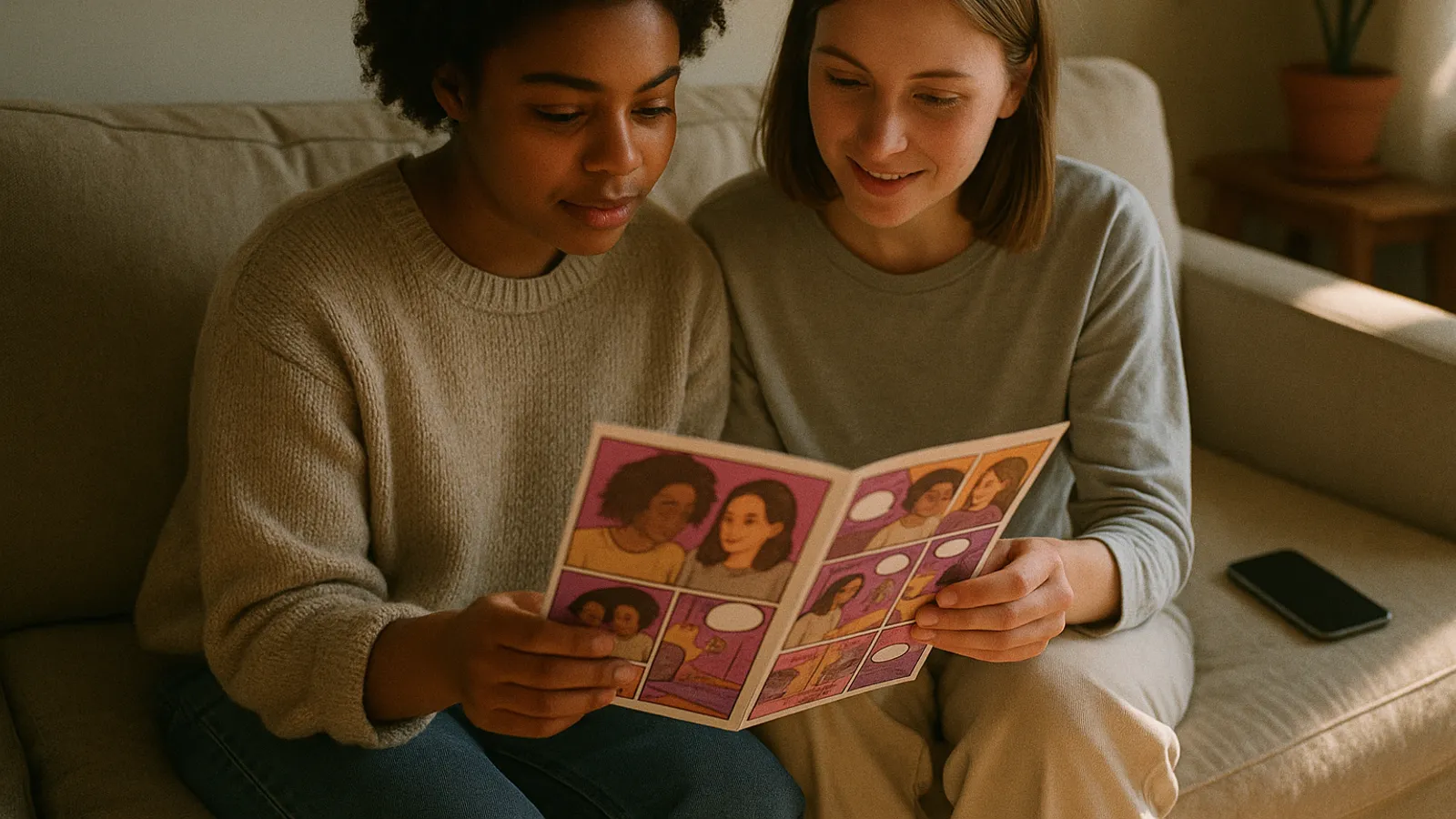
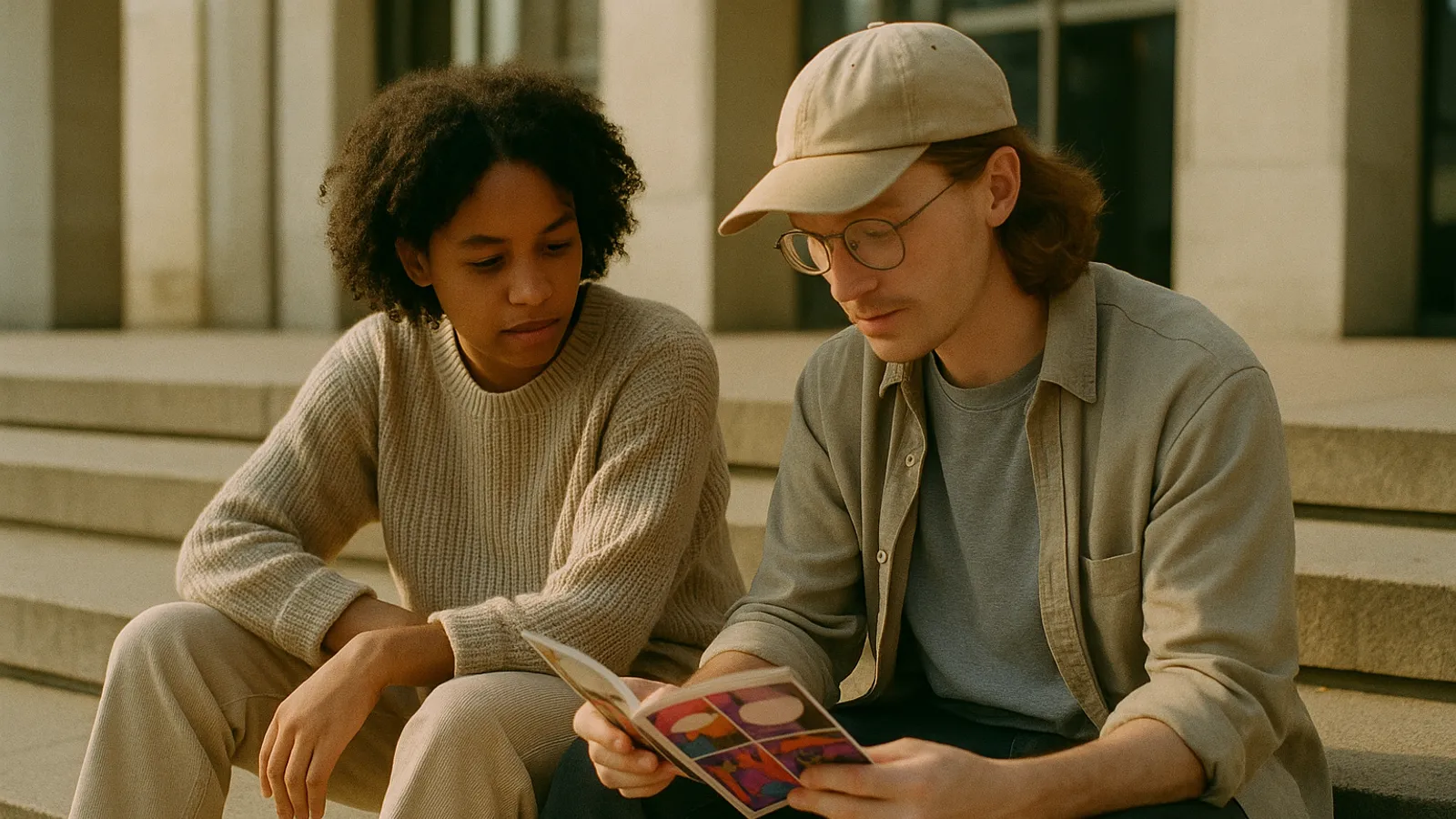
You will come home with good raw material: photos of your group in costume, the friend who committed far too hard to a bit, the Sunday afternoon exhaustion on the steps outside. There are several honest ways to use them.
Commission it at the con. Many Artist Alley artists take commissions on the spot. Show them a photo of your group and ask for a single illustration or a small strip. It is the most personal souvenir you can bring home, and the money goes to someone whose work you liked.
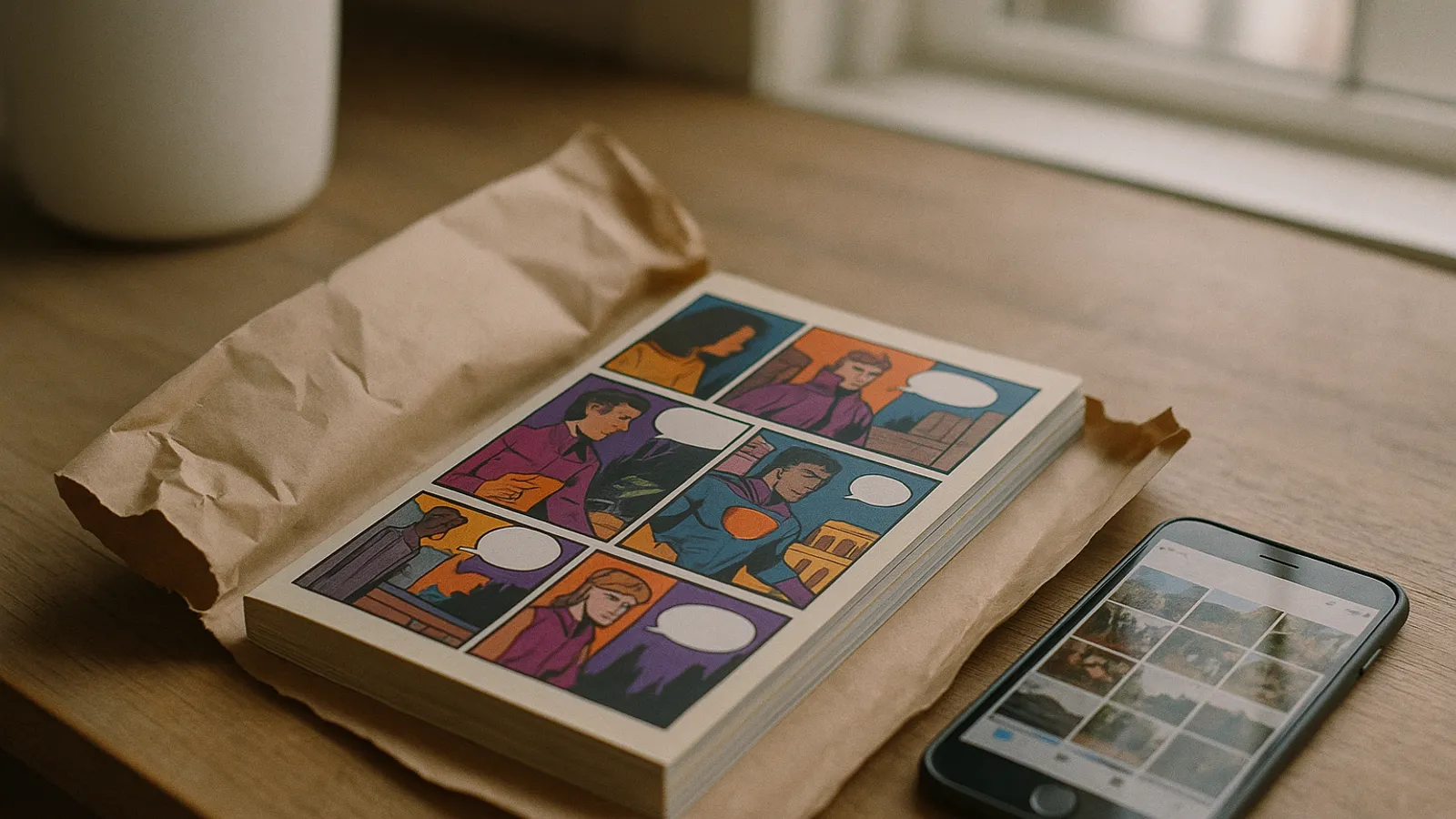
Make a zine yourself. A folded eight page zine with your photos, a few drawn speech bubbles and some handwritten captions is a very convention thing to make, and it needs nothing but a printer and an evening.
Make a photo book. If the costumes are the story, sometimes the photos as they are say it best.
Use a photo to comic tool. If you want a longer story where the same faces stay consistent across pages, this is where an AI tool helps. The rough shape:
- Pick three to eight photos per person. Clear, well lit, whole face visible. Costume shots work as long as the face is not covered; a mask or a full helmet is the one thing that defeats it.
- Build a character for each person, so the same face stays consistent from panel to panel rather than drifting by page six.
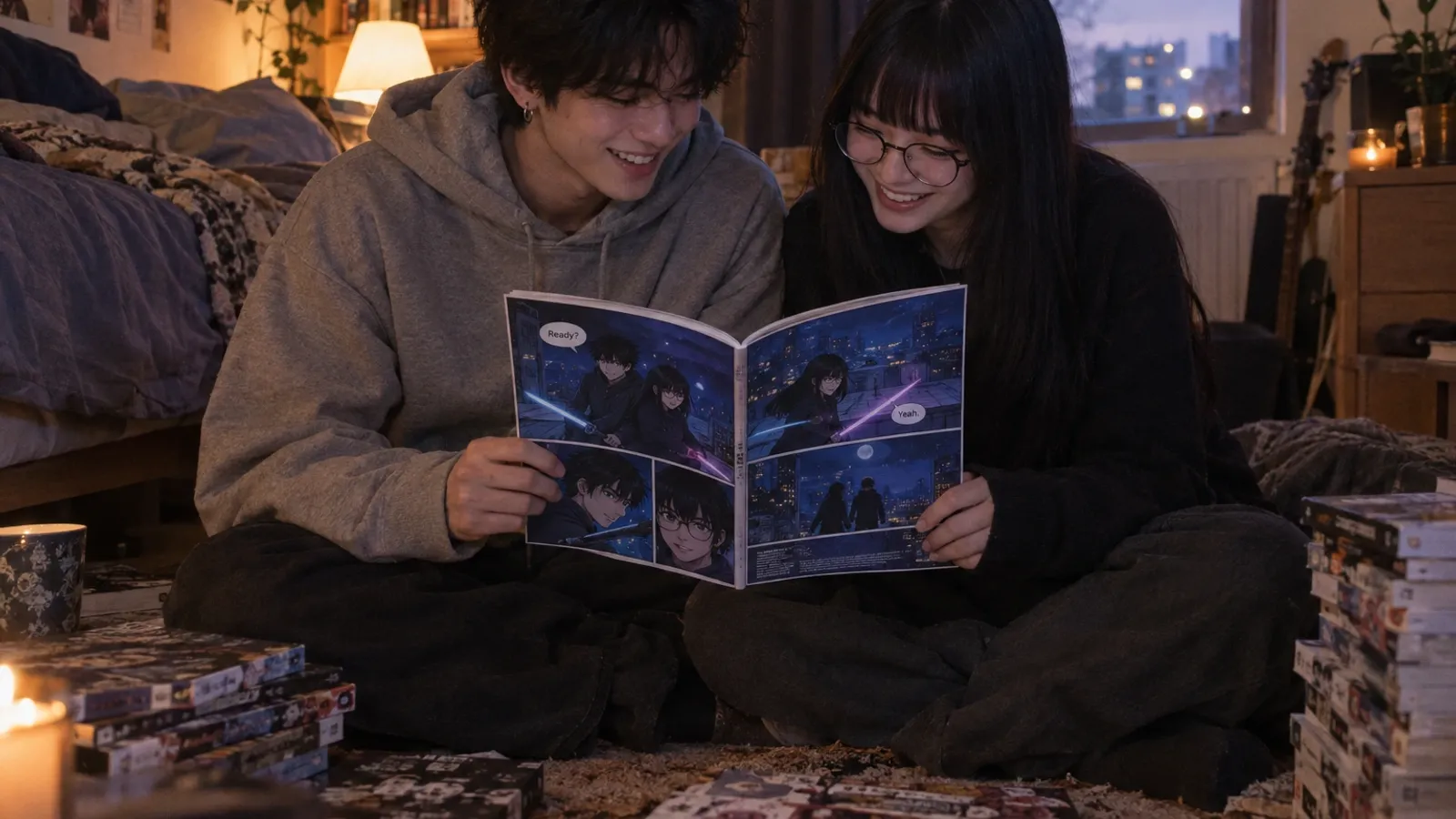
- Choose a style that matches the trip. Superhero for the group that went all in. Manga for a friendship story. Cartoon if it is mostly a comedy about parking.
- Give it a premise. “Four friends survive Halloween weekend at a convention” is a better start than a panel by panel script. Then steer the story as it branches.
- Read it, export the PDF, or order it printed for the person the story is really about.
We wrote the longer version of that process in how to turn your photos into a comic, and if the goal is a gift rather than a keepsake, what makes a comic work as a present covers the differences. If you just want to start from the photos, the photo to comic walkthrough is the shortest path.
Go to the con. Buy something from Artist Alley. Then, in the flat week afterwards, make something yourself, in whatever way suits you.